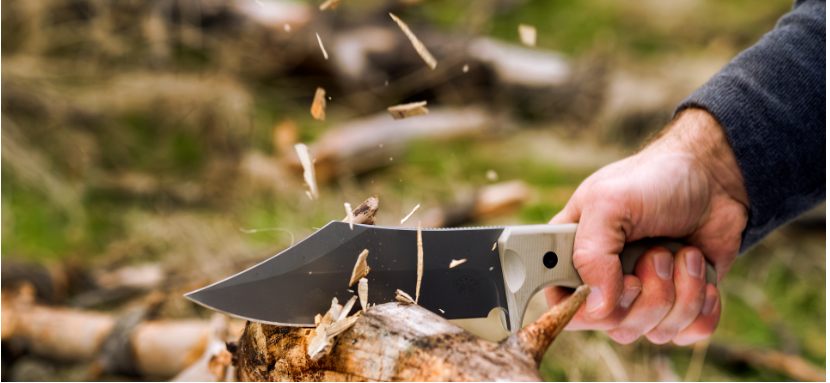
Many knife owners assume that if a Bowie knife is legal in their state, police cannot take it from them. Unfortunately, that assumption is not always correct. Even when possession of a Bowie knife is legal, law enforcement officers may still confiscate it under certain circumstances. The difference between lawful ownership and temporary seizure is something many people misunderstand — and that misunderstanding can lead to frustration, legal trouble, or permanent loss of property.
A Bowie knife is typically classified as a large fixed-blade knife and, in many jurisdictions, it qualifies as a “deadly weapon.” That classification alone changes how officers and courts treat it. Police authority to seize property does not depend solely on whether the object itself is legal. Instead, seizure authority depends on context: the location, the situation, the officer’s probable cause, and whether a crime is suspected.
In this comprehensive guide, we will examine when police can legally confiscate a Bowie knife, when they cannot, what “probable cause” means, how temporary seizure differs from permanent forfeiture, what happens during traffic stops, how arrests affect knife ownership, and what you can do if your knife is taken.
Legal Ownership Does Not Always Prevent Seizure
Owning a Bowie knife legally is only the starting point. The Constitution protects against unreasonable searches and seizures under the Fourth Amendment, but it does not prevent police from taking property when there is lawful justification.
For example, if an officer has probable cause to believe that a weapon is connected to criminal activity, they may seize it as evidence — even if possessing that type of weapon is generally legal. The key issue is not whether the knife is banned, but whether the officer believes it is relevant to a crime.
In many states, including Texas and Florida, large knives are broadly legal to own. However, if an officer believes the knife was used in an assault, brandished unlawfully, or carried in a restricted location, seizure becomes legally justified.
This is why legality of ownership does not equal immunity from confiscation.
Common Situations Where Police Confiscate Bowie Knives
There are several real-world scenarios where confiscation commonly occurs. Understanding these situations helps knife owners avoid unexpected consequences.
1. During an Arrest
If you are arrested — even for a non-violent offense — officers typically inventory and seize all weapons on your person or within reach. This includes Bowie knives. The knife may be logged as property, stored, and returned later if no weapon-related charges apply.
However, if the arrest involves violence or threats, the knife may be held as evidence.
2. After a Self-Defense Incident
If a Bowie knife is used in a self-defense situation, police will almost always seize it immediately. Even if the use of force was lawful, the knife becomes evidence in the investigation. It may remain in police custody until the case is fully resolved.
This does not automatically mean you committed a crime. It simply means the object is part of an active investigation.
3. Traffic Stops With Probable Cause
During a routine traffic stop, police cannot search your vehicle without consent, probable cause, or another legal exception. However, if they lawfully discover a Bowie knife — especially in a state with concealed weapon restrictions — they may temporarily confiscate it pending clarification of legality.
For example, in California, fixed-blade knives cannot be concealed. If an officer finds one hidden under a seat, they may seize it and issue a citation.
4. Restricted Locations
Certain areas prohibit weapons entirely. These may include:
- Schools
- Federal buildings
- Courthouses
- Airports
- Government facilities
If you bring a Bowie knife into a prohibited area, even unintentionally, officers may confiscate it immediately. In some cases, you may also face charges.
What Is “Probable Cause” and Why It Matters
Probable cause is a legal standard requiring officers to have reasonable grounds to believe a crime has occurred or that evidence of a crime is present.
It does not require certainty.
If an officer reasonably believes your Bowie knife is connected to criminal activity — such as assault, threats, or illegal concealment — that belief may justify seizure.
Courts generally give officers some discretion in these decisions, especially when public safety concerns are involved.
Temporary Seizure vs Permanent Forfeiture
Many people panic when their knife is taken, assuming it is gone forever. That is not always true.
There is a major legal difference between temporary seizure and forfeiture.
Temporary seizure means the knife is held as evidence or for safekeeping. Once the case concludes, and if no conviction prohibits possession, you may be eligible to request its return.
Permanent forfeiture happens when:
- The knife is deemed contraband.
- You are convicted of a crime involving the weapon.
- The law prohibits you from possessing weapons (such as certain felony convictions).
Understanding this distinction is critical.
Can Police Take Your Knife Just for “Officer Safety”?
In some situations, yes — temporarily.
If an officer encounters a visibly armed individual during a lawful stop, they may disarm that person temporarily for safety reasons. Once the interaction concludes, and if no law has been violated, the knife should generally be returned.
However, if additional legal violations are discovered, the temporary disarmament may become formal confiscation.
State Differences in Enforcement Culture
While the law may technically allow possession, enforcement culture varies dramatically by region.
In rural areas of Montana or Idaho, officers may treat large knives as common outdoor tools.
In densely populated areas of New York or New Jersey, officers may scrutinize large fixed blades more aggressively.
The same knife may receive different reactions depending on location and context.
What Happens After Confiscation?
If your Bowie knife is confiscated, the process usually follows these steps:
- The knife is tagged and logged into evidence or property storage.
- You receive documentation (property receipt).
- If charges are filed, the knife may remain in custody until the case concludes.
- If no charges are filed, you may need to submit a formal request for return.
In some jurisdictions, unclaimed property may eventually be destroyed if not reclaimed within a specific timeframe.
Can You Refuse to Surrender the Knife?
If an officer has lawful authority to seize property, refusing to comply can result in additional charges, including obstruction or resisting an officer.
Even if you believe the seizure is improper, the correct approach is to comply peacefully and challenge it later through legal channels.
Arguing roadside rarely produces favorable outcomes.
Civil Asset Forfeiture Concerns
In rare situations involving broader criminal investigations, property including weapons can become subject to civil asset forfeiture laws. This is more common in cases involving drugs or organized criminal activity rather than ordinary knife possession.
However, the risk exists if the knife is allegedly tied to illegal activity.
Protecting Yourself Legally
If you legally own a Bowie knife and want to minimize risk:
- Understand state and local laws.
- Avoid carrying in restricted locations.
- Store responsibly in vehicles.
- Do not brandish or display unnecessarily.
- Remain calm during police interactions.
- Keep documentation if relevant (such as proof of purchase).
Knowledge reduces misunderstandings.
Final Thoughts
So, can police confiscate your Bowie knife?
Yes — under certain legal conditions.
Even if the knife itself is legal to own, police may seize it if:
- It is evidence of a crime.
- It is carried illegally.
- It is present in a restricted location.
- You are arrested.
- There are officer safety concerns.
However, confiscation does not always mean permanent loss. In many cases, knives are returned after investigations conclude — provided no laws were violated.
Understanding the difference between legal ownership and lawful seizure authority is essential for every knife owner. The law focuses not just on what you own, but how, where, and under what circumstances you possess it.