Carrying a Bowie knife inside your vehicle might seem simple. Many people assume that if they legally own a knife, they can keep it in their car without any legal risk. However, the law is rarely that straightforward. In reality, vehicle carry laws can be more complicated than open carry or concealed carry on foot. Depending on your state, how the knife is stored, whether it is concealed, and even why it is in your vehicle, the legal consequences can range from completely lawful to serious criminal charges.
A Bowie knife, because of its size and fixed-blade design, is often classified differently than small folding pocket knives. Courts frequently consider it a “deadly weapon,” and that classification changes how certain laws apply. While the Second Amendment protects the right to bear arms, knife regulation is largely governed by state law, and vehicle carry rules vary widely across the country.
In this complete guide, we will examine how state laws treat knives in vehicles, what “concealed” means in the context of a car, how law enforcement evaluates intent, what happens during traffic stops, and what legal risks you should understand before keeping a large fixed-blade knife in your vehicle.
Why Vehicle Carry Is Legally Different From Carrying on Foot
When you carry a Bowie knife on your person, the law typically analyzes whether it is concealed or openly carried. Inside a vehicle, however, the analysis becomes more complex. In many states, the inside of a vehicle is legally considered an extension of your person. That means if a knife is hidden in your glove compartment, center console, under the seat, or inside a closed bag, it may legally qualify as concealed carry.
In some jurisdictions, concealment does not require the weapon to be hidden under clothing. Simply placing it somewhere not visible to ordinary observation may qualify. Courts often ask whether an average person approaching the vehicle could easily see the knife without searching. If the answer is no, prosecutors may argue that it was concealed.
This distinction matters because even in states where open carry of large knives is legal, concealed carry may be restricted or require specific conditions. A Bowie knife stored under the seat may be treated very differently than one secured openly in a visible sheath mounted in plain sight.
State Law Differences: Why Location Changes Everything
Knife laws are state-specific, and vehicle carry rules are no exception. For example, in Texas, large knives are generally legal to possess, and vehicle carry is relatively permissive, though certain restricted locations like schools and polling places still apply. However, in California, fixed-blade knives cannot be concealed. That means placing a Bowie knife in a glove box or backpack inside your vehicle could potentially violate concealed weapon laws.
Meanwhile, states like New York can apply stricter interpretations, especially in major metropolitan areas. Even if state law does not explicitly prohibit vehicle carry, local enforcement patterns can be far more aggressive.
Because there is no uniform national knife law covering vehicle carry, crossing state lines with a Bowie knife in your car can dramatically change your legal exposure. What is completely legal in one state could become a criminal offense just a few miles away.
What Does “Concealed” Mean Inside a Vehicle?
Concealment inside a vehicle often depends on visibility and accessibility. Courts may consider several factors, including:
- Is the knife visible from outside the vehicle?
- Is it readily accessible to the driver?
- Is it secured in a locked container?
- Is it in the trunk or passenger area?
- Is it in plain view but partially covered?
For example, a Bowie knife in a sheath mounted openly on the dashboard may not be considered concealed. However, placing the same knife inside a backpack on the passenger seat could qualify as concealed, depending on state law.
Some states treat a trunk differently from the passenger compartment. A knife stored in the trunk may be considered transported rather than carried. That distinction can sometimes reduce legal risk.
Intent and How Police Evaluate Situations
One overlooked factor in vehicle knife cases is intent. During a traffic stop, officers may ask why the knife is in the vehicle. Your explanation can influence how the situation develops.
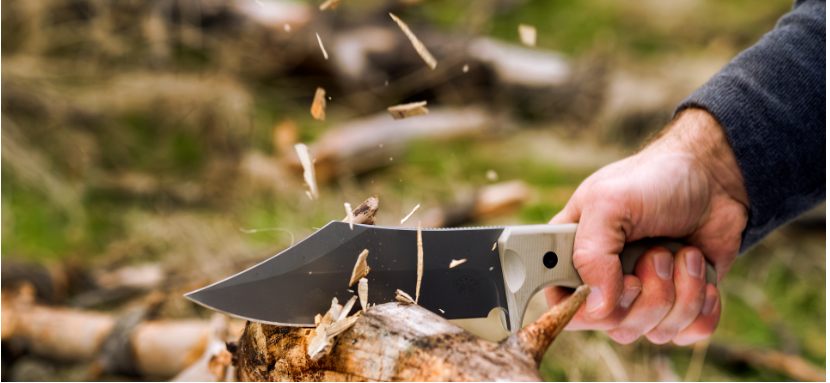
If you say the knife is used for camping, hunting, or outdoor utility, that context may support lawful possession. However, if you state that you keep it “for protection” in a state with strict concealed weapon rules, that admission may create complications.
Law enforcement officers evaluate:
- Location of the knife
- Accessibility
- Statements made by the driver
- Criminal history
- Surrounding circumstances
Even if the knife is technically legal, suspicious circumstances can lead to temporary seizure or arrest, especially if the officer believes other crimes may be involved.
Traffic Stops: What Typically Happens
If you are pulled over and have a Bowie knife in your vehicle, whether you must disclose it depends on state law. Knife disclosure laws are not as standardized as firearm disclosure laws.
If the knife is in plain view, officers will likely notice it. If it is concealed and discovered during a lawful search, questions may follow.
It is important to remain calm, avoid sudden movements, and comply with lawful instructions. Escalation during a stop involving a visible large knife can increase tension unnecessarily.
School Zones and Restricted Locations
Even if vehicle carry is generally legal, federal and state laws restrict weapons near schools and certain government facilities. A Bowie knife in your car while parked on school property could result in serious charges, even if you never remove it from the vehicle.
Certain restricted locations may include:
- Schools
- Federal buildings
- Courthouses
- Airports
- Polling locations
- Government offices
Always check whether “possession in vehicle” counts as possession on the premises under local law.
Interstate Travel With a Bowie Knife
Unlike firearms, there is no broad federal safe-passage protection specifically for knives when traveling between states. That means you must comply with each state’s law as you enter it.
If you are driving cross-country with a Bowie knife in your trunk for camping, it is wise to:
- Keep it secured
- Store it in the trunk
- Avoid easy accessibility
- Avoid concealed carry in restrictive states
Even lawful outdoor use does not override state-level concealed weapon restrictions.
Is It Safer to Keep It in the Trunk?
From a legal risk perspective, storing a Bowie knife in the trunk is often safer than keeping it within reach. Many states treat trunk storage as transport rather than carry. This can reduce arguments that you were carrying a concealed deadly weapon for immediate use.
However, this is not universal. Some jurisdictions focus solely on possession, not accessibility.
Civil Liability Risks
Even if possession in your vehicle is legal, brandishing or using the knife during a road rage incident could result in severe criminal and civil consequences.
Vehicle-related altercations escalate quickly. Introducing a large fixed-blade knife into such a scenario significantly increases legal exposure.
Practical Advice for Responsible Owners
If you choose to keep a Bowie knife in your vehicle:
- Know your state’s concealment laws.
- Avoid storing it within immediate reach in restrictive states.
- Do not display it unnecessarily.
- Avoid discussing self-defense intent casually.
- Understand location-based restrictions.
A large fixed-blade knife carries more legal scrutiny than a small utility blade.
Final Thoughts
So, is it legal to carry a Bowie knife in your car?
In many states, yes — but the legality depends heavily on:
- Whether it is concealed
- Where it is stored
- Your state’s definition of deadly weapon
- Local enforcement patterns
- Restricted locations
- Interstate travel rules
Vehicle carry laws can be more complicated than people assume. A Bowie knife may be a lawful tool for outdoor activities, but improper storage or misunderstanding concealment rules can turn a legal possession into a criminal charge.
Understanding your local statutes before keeping a large knife in your vehicle is not optional — it is essential.