Many people who buy a Bowie knife eventually ask the same question:
“Can I legally carry a Bowie knife for self-defense?”
It sounds simple, but the answer is not just yes or no. The legality of carrying a Bowie knife for self-defense depends on several layers of law:
- State knife carry laws
- Concealment rules
- Blade length restrictions
- Location-based prohibitions
- Use-of-force laws
- Self-defense justification standards
Even if carrying the knife itself is legal, using it for self-defense introduces a completely separate legal analysis. That is where many people get into serious trouble.
This guide explains everything clearly and in depth so you fully understand both your rights and your risks.
Understanding What a Bowie Knife Represents Legally
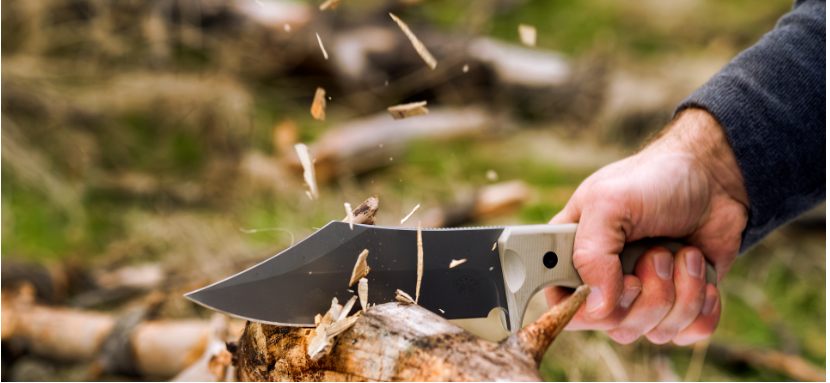
A Bowie knife is not a small pocket tool. It is typically a large fixed-blade knife designed historically for combat and survival. It is often associated with Jim Bowie, whose name became permanently attached to this style of knife.
Because of its size and design, courts often consider a Bowie knife a “deadly weapon.” That classification matters.
Under U.S. criminal law, a deadly weapon is any object capable of causing serious bodily injury or death. A large fixed-blade knife almost always qualifies.
That does not mean it is illegal.
It means that if you use it, the legal consequences can be severe unless the use is fully justified under self-defense law.
Step 1: Is It Legal to Carry a Bowie Knife?
Before even discussing self-defense, you must first determine whether carrying the knife is legal in your state.
Knife laws vary dramatically across the United States.
For example:
In states like Texas, large knives are generally legal to carry, with certain location-based restrictions.
In states like California, fixed-blade knives cannot be concealed but may be openly carried.
In states like New York, local enforcement can be much stricter, especially in cities.
This means you cannot assume legality based on general reputation. You must know your specific state’s carry rules.
If carrying the knife itself is illegal, self-defense justification will not protect you from the separate weapons charge.
Step 2: Legal Carry vs Legal Use
Many people misunderstand this distinction.
Carrying a weapon legally does not automatically make using it legal.
Use of force laws are separate from weapon carry laws.
Even in a state where you may legally carry a Bowie knife, you may only use it under very specific circumstances.
Generally, deadly force is justified only when:
- You face an imminent threat of death or serious bodily injury.
- You are not the aggressor.
- Your response is proportional to the threat.
- In some states, you have a duty to retreat (unless stand-your-ground applies).
Because a Bowie knife is a deadly weapon, using it almost always qualifies as deadly force.
Deadly force standards are strict.
What Counts as Legitimate Self-Defense?
To legally use a Bowie knife in self-defense, several conditions must be met:
1. Immediate Threat
The threat must be happening right now. Words alone usually do not justify deadly force.
2. Reasonable Fear
A reasonable person in your position must believe they are about to suffer serious harm.
3. Proportional Response
You cannot use deadly force against a minor non-deadly threat.
For example:
If someone shoves you in an argument, stabbing them would likely be considered excessive force.
If someone attacks you with a firearm or large weapon, the analysis changes.
Stand Your Ground vs Duty to Retreat
Some states have Stand Your Ground laws. Others impose a duty to retreat if safe escape is possible.
In Stand Your Ground states like Florida and Texas, you may not be required to retreat before using force if you are lawfully present.
In duty-to-retreat states, you may need to attempt safe escape before using deadly force.
This difference can dramatically impact the legal outcome of a defensive knife use.
Criminal Charges You Could Face
If authorities determine your use of a Bowie knife was unjustified, potential charges could include:
- Aggravated assault with a deadly weapon
- Attempted manslaughter
- Manslaughter
- Second-degree murder
Even if you ultimately win at trial, you may face arrest, prosecution, legal fees, and public scrutiny.
Self-defense cases are rarely simple.
Civil Lawsuits After Self-Defense
Even if you are not criminally convicted, you may face civil lawsuits.
The injured party (or their family) can sue for damages.
Civil court standards are lower than criminal standards.
Winning criminally does not guarantee winning civilly.
Real-World Practical Considerations
A Bowie knife is intimidating. Its size can escalate situations quickly.
If displayed unnecessarily, it can:
- Escalate a verbal dispute
- Increase the chance of someone using greater force against you
- Lead to brandishing charges
Many self-defense experts recommend de-escalation whenever possible.
A knife fight is unpredictable and dangerous for everyone involved.
Police and Prosecutor Perspective
When law enforcement arrives at a scene involving a large fixed-blade knife, they will evaluate:
- Who started the conflict
- Whether the knife was introduced unnecessarily
- Whether you had safe alternatives
- Whether you escalated the situation
Prosecutors often argue that a large combat-style knife suggests aggressive intent.
Even if that argument is not legally decisive, it can influence jury perception.
Is a Bowie Knife Practical for Self-Defense?
From a purely tactical perspective, Bowie knives are:
- Large
- Hard to conceal legally in many states
- Difficult to deploy quickly
- Extremely lethal
For these reasons, they are not typically recommended as primary self-defense tools in urban environments.
They are better suited for:
- Outdoor survival
- Hunting
- Utility use
- Collection
Smaller legal tools or less-lethal defensive options may create fewer legal risks.
Key Legal Reality
The law does not ask:
“Did you feel scared?”
It asks:
“Was deadly force objectively necessary?”
That standard is difficult to meet unless the threat is severe.
Final Conclusion
Can you carry a Bowie knife for self-defense?
In many states, yes — if you comply with carry laws.
Can you use a Bowie knife in self-defense?
Only if you meet strict deadly force legal standards.
The knife itself is not illegal in most states. But misuse can lead to life-changing consequences.
Before carrying a Bowie knife for self-defense, you must understand:
- Your state’s carry laws
- Concealment restrictions
- Location bans
- Deadly force standards
- Stand-your-ground or retreat rules
- Civil liability risks
Self-defense law is complex. The weapon does not change that reality.